

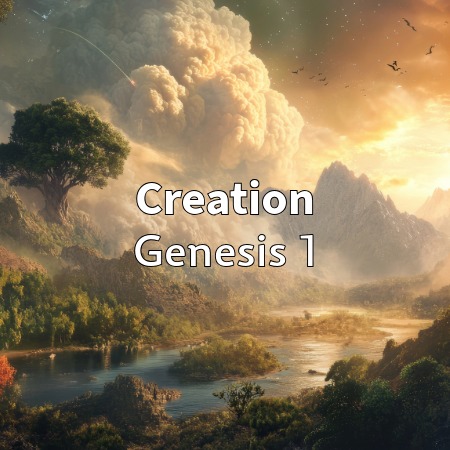
Genesis 1 – Creation opens with a question, “When was the last time you went to see the stars?” That opens our study of Genesis 1—and reminds us just how enormous the subject of creation really is. Genesis begins not by attempting to prove God’s existence, but by telling us what God did: “In the beginning God created the heavens and the earth.”
Trinity In Action
Creation is the work of the Triune God. Scripture particularly identifies the Father as Creator, yet John 1 reveals that Jesus, the eternal Word, was there in the beginning and that “through him all things were made.” God did not need preexisting materials or elaborate tools. He spoke—and creation obeyed. Genesis also describes God’s work in days marked by “evening” and “morning,” while Exodus 20 points back to God creating the heavens and earth in six days. Even the lights God placed in the heavens have a purpose: Genesis 1:14 says they mark “seasons and days and years.” In that sense, the universe itself serves as a magnificent clock.
Fallen – Forgiven
But Genesis is about more than where stars, planets, plants, animals, and people came from. Humanity occupies a special place in God’s creation. Adam and Eve were created in God’s image. Sin tragically shattered that perfection, and their descendants inherited a fallen nature. Ultimately, creation is an article of faith. Hebrews 11:3 says, “By faith we understand that the universe was formed at God’s command.” That faith, however, doesn’t end with the Creator. It leads us to Jesus—the eternal Word through whom everything was made and the Savior through whom fallen humanity is restored. The God who said, “Let there be light,” is still at work through his powerful Word today.
Want to hear more? Watch this week’s study taken from Genesis 1 – Creation.
Please click HERE for the Bible class slides.